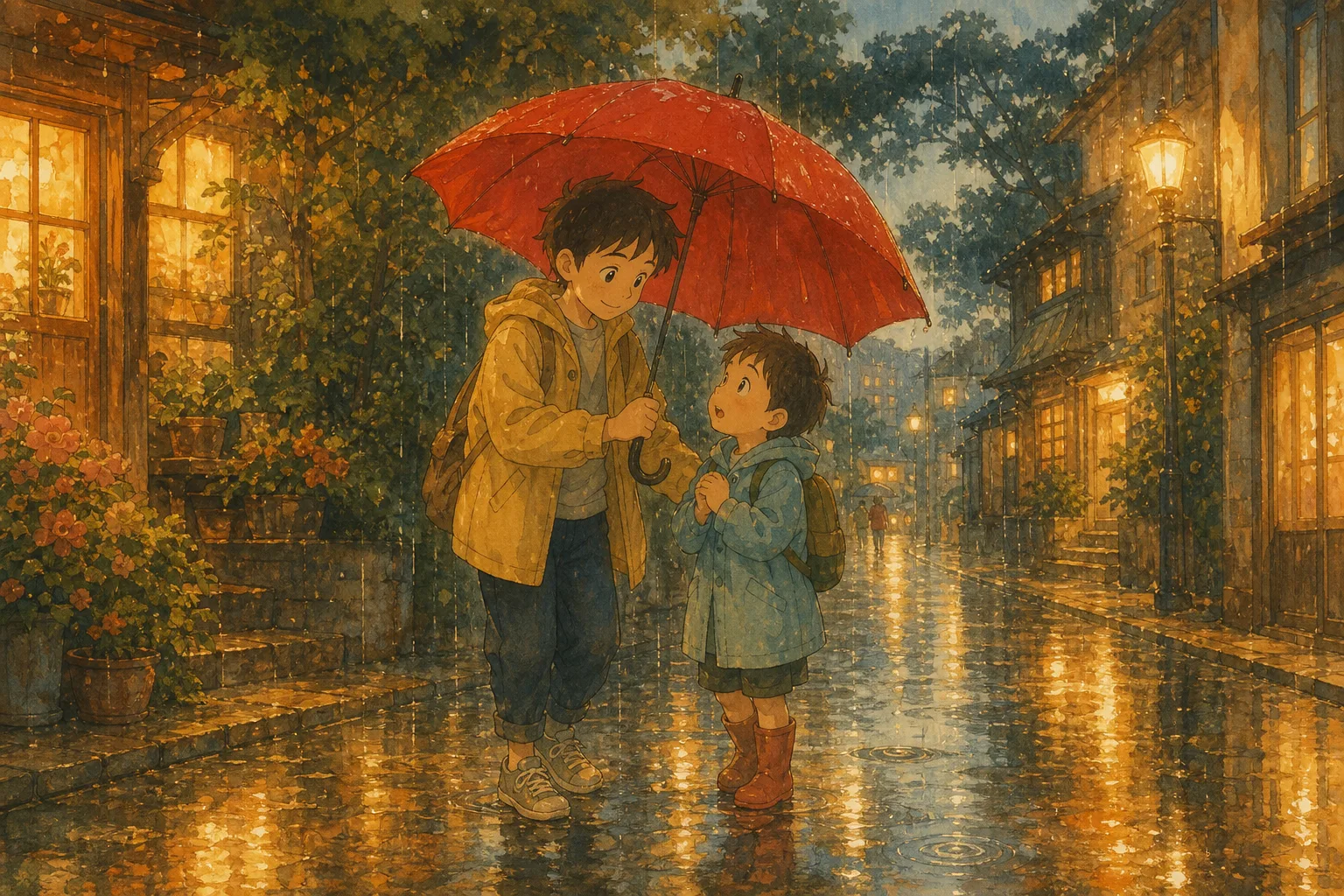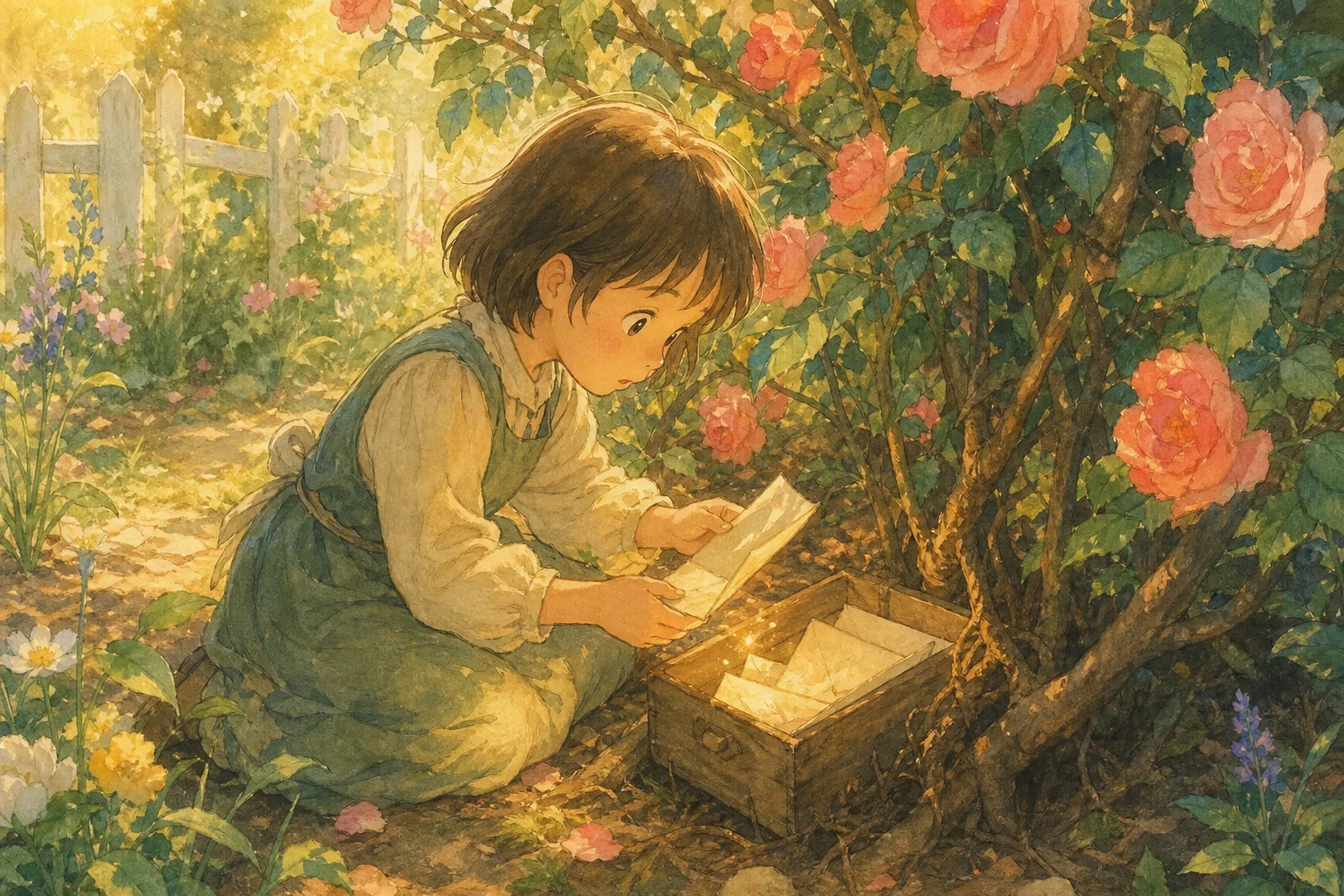
On the morning after her seventh birthday, Amara sat at the kitchen table and wrote a thank-you note to her grandmother.
She wrote slowly, in her best handwriting, pressing the pencil down firmly so every letter was clear. Dear Grandma, Thank you for the red boots. They are exactly the right colour. I wore them already. Love, Amara.
Her mother folded the note into an envelope, wrote the address in the corner, and put a stamp on it — a stamp with a little bird on it, which Amara thought was very fitting.
Then she dropped it in the red postbox on the corner, and the letter was gone.
What happened next, Amara didn't know for a long time. But here is what happened:
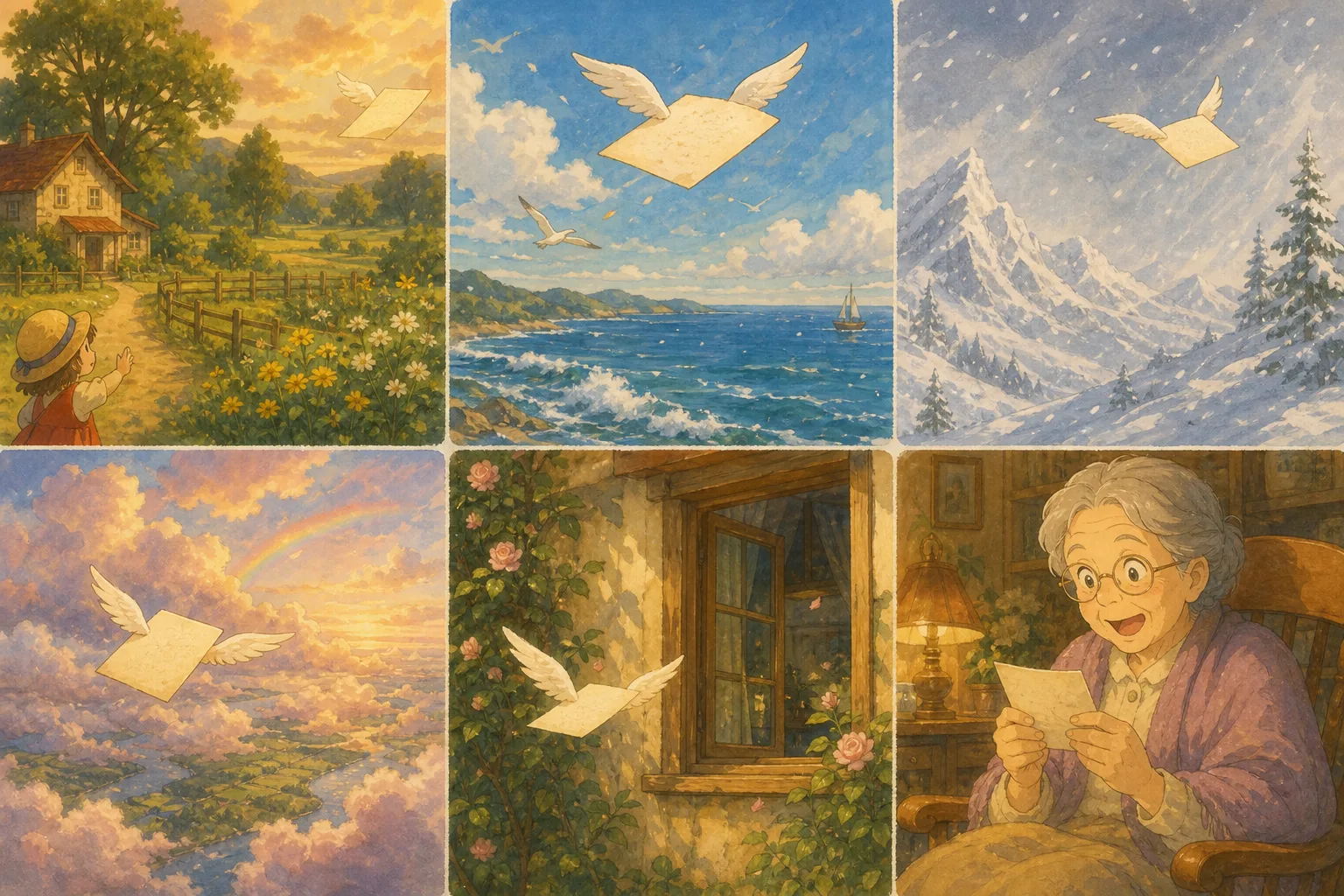
The letter went into a mail van, which smelled of canvas bags and early mornings. It went to a sorting office, where a machine sorted it into a stack of other letters going to the same part of the world. A postal worker named Daniel put it in a stack with forty-seven other envelopes, all of them headed somewhere important to someone.
The letter then flew — inside a mail bag, inside a plane — over the sea and over mountain ranges and over desert that glowed orange in the morning light. It flew for nine hours. Below it, people were waking up, going to work, eating breakfast, having arguments, making up, getting married, being born.
The letter landed in a city. It went into a smaller van. A postal worker named Amina carried it up four flights of stairs along with fourteen other letters and a small package that smelled of lavender.
And then Grandma opened her door, and there was the letter, in the middle of the pile, with the little bird stamp and Amara's careful handwriting.
Grandma read it three times. Then she put it on her kitchen table, next to the window where the light was good, and looked at it while she had her tea.
Thank you for the red boots. They are exactly the right colour.
Grandma smiled the kind of smile that takes a while to arrive but stays a very long time. She thought about Amara's face, which she hadn't seen in four months. She thought about the boots, which she had worried about — was red the right colour? Was the size right? — and how she might be worrying about nothing, as usual.
They were the right colour. Amara had worn them already.
That evening, Grandma called Amara on the phone, just to talk. They talked for twenty-two minutes, which was a record. Grandma told Amara about the pigeons outside her window. Amara told Grandma about her boots, which had been through a puddle and survived.
All of that — the twenty-two minutes, the pigeons, the puddle — because Amara had sat down the morning after her birthday and written: Thank you.
Two words. One letter. Thousands of miles. And a grandmother who felt, for the rest of that week, like someone very nearby.